
How can medium and large brands effectively reach high-income consumers and business decision-makers in Poland? Airport advertising provides strategic brand presence in a high-quality environment where travelers spend extended periods with a high quality of attention.
By matching the right OOH and DOOH formats to the audience’s travel rhythm, brands can build prestige, frequency of contact, and strong recall among both domestic and international passengers.
Airport Advertising in Poland: Key Facts and Audience Insights
Understanding the context of contact and the specific audience profile at Polish airports is the foundation of strategic media planning. When you know how the environment shapes passenger behavior, you can design a campaign that directly supports your business goals.
Who Sees Airport Advertising in Poland?
Passengers at Polish airports represent a highly specific demographic. The audience consists primarily of business professionals traveling for corporate events, tourists heading for holidays, and international visitors. This group generally possesses above-average income and strong purchasing power.
For brands, this means advertising in airports provides access to an audience that is financially capable and often willing to make premium purchases. Industry data indicates a significant portion of this audience actively engages with retail environments while waiting for their flights.
What Is the Unique Mindset of Polish Air Travelers?
The context of contact in an airport is entirely different from a typical urban commute. Travelers are removed from their daily routines, often experiencing a heightened sense of anticipation. This shift in mindset creates a space of high-quality attention.
Passengers are more receptive to brand messaging because they are in a waiting period with limited distractions. Instead of ignoring displays, they frequently view advertising as a natural part of the airport experience, absorbing information at a much slower, more deliberate pace.
How Large Is the Audience at Major Polish Airports?
Air travel across major Polish hubs continues to experience consistent volume growth. Airports in cities like Warsaw, Kraków, and Gdańsk serve millions of domestic and international passengers annually. This steady foot traffic provides brands with a scalable platform for broad visibility.
Because passengers dwell in specific zones (check-in, security, gates, and baggage claim) the environment naturally builds frequency of contact, ensuring the message is seen multiple times before departure.
Explore airport advertising formats in Poland →


FILL OUT THE FORM
GET A FREE QUOTE AND CONSULTATION!
10 Reasons Why Airport Advertising in Poland Works for Brands
When integrated into a broader media strategy, airport advertising delivers specific advantages for medium and large enterprises.
1. Targets Affluent and Diverse Travelers
Airport campaigns allow brands to reach a concentrated group of high-net-worth individuals, reducing media waste. Travelers are frequently in a spending mindset, making this an optimal environment for premium products, financial services, and modern technology. It also consolidates international and domestic demographics into a single, high-traffic location.
2. Captive Environment With High Dwelling Times
Airports are defined by mandatory waiting periods. Passengers spend an average of two hours navigating check-in, security, lounges, and gates. This dwell time provides the brand with repeated opportunities to capture attention. Unlike fast-paced digital scrolling, airport media commands sustained visibility.
3. Reaches Influential Decision Makers
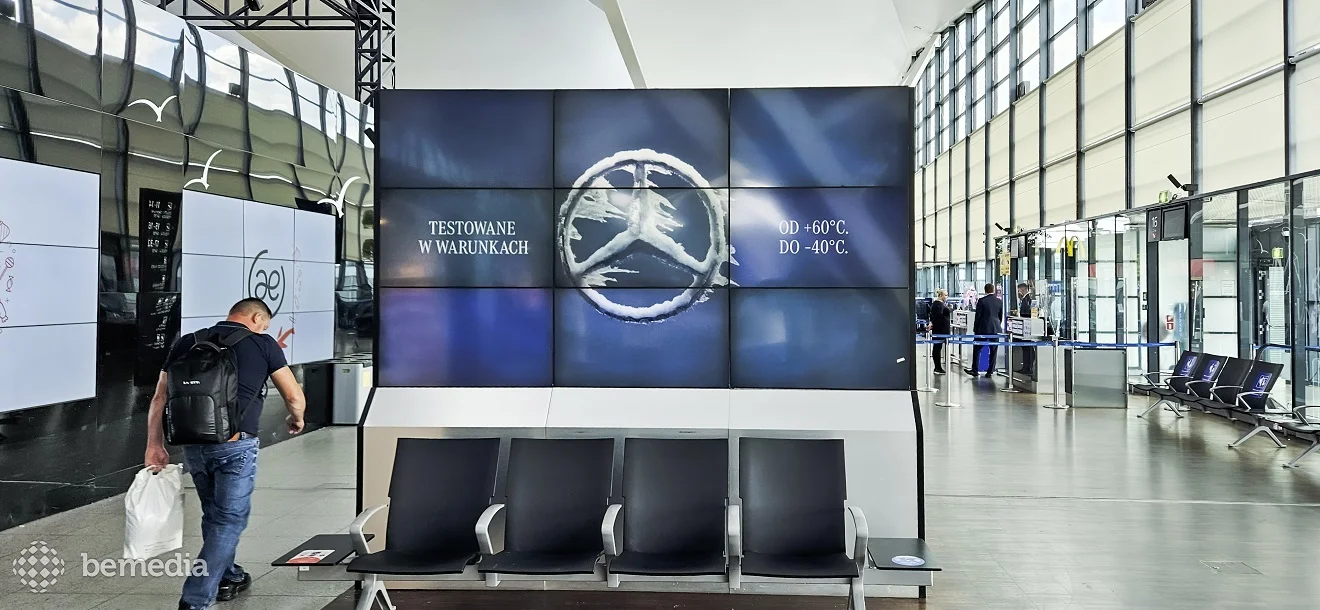
Airports serve as a primary transit hub for C-level executives, managers, and business owners. These professionals frequently remain in a work-oriented mindset while traveling. Research shows that:
- Executive audiences view airports as a highly relevant space for international B2B communication.
- Business travelers often actively process industry-related information while waiting in lounges or at gates.
- The concentration of senior corporate roles is significantly higher here than in standard public spaces.
This makesairport DOOH and OOH formats highly effective for employer branding, SaaS, and financial sector campaigns.
4. Delivers High Advertising Recall and Engagement
Because travelers are isolated from their usual daily distractions, their awareness of their surroundings increases. Repeated exposure across the passenger journey builds strong ad recall. Frequent flyers, in particular, become highly familiar with long-term brand placements.
5. Lifts Brand Image in a Premium Setting
Modern airports are designed to reflect comfort, global connectivity, and prestige. Aligning your brand with this high-end architectural space naturally elevates the perception of your product or service. Consumers expect to see industry leaders advertised in these locations, which helps build trust and authority.
6. Provides International and Domestic Reach
Major Polish airports function as gateways to both Central Europe and global destinations. Advertising here allows a brand to maintain a strong local presence while simultaneously building recognition among international visitors, supporting both regional market penetration and broader brand building.
7. Low Media Waste Compared to Other Channels
The audience in an airport is inherently pre-qualified by their ability to travel. By selecting specific terminals, lounges, or flight routes, brands can align their media spend with a very distinct consumer profile, ensuring the message reaches an audience with genuine purchasing potential.
8. Boosts Consumer Purchase Intent and On-Site Sales
For FMCG, beauty, and retail brands available within the duty-free zones, airport advertising acts as a direct catalyst for purchase decisions. Strategic placement near retail areas bridges the gap between brand awareness and immediate transactional behavior.
9. Flexible Formats from Digital to Large-Scale Installations
The variety of available media allows for precise matching of format to the campaign goal. Options include:
- Large-format OOH banners and architectural wraps for maximum impact.
- DOOH screens and video walls for dynamic, time-sensitive messaging.
- Experiential zones for product sampling and direct interaction.
This scalability ensures that both long-term image campaigns and short-term promotional activations can be executed effectively.
10. Audience and Market Growth in Polish Aviation
As aviation infrastructure in Poland expands, so does the audience pool. Upgraded terminals and increased flight routes mean growing passenger volumes, providing brands with an expanding platform for visibility in the public space.
What Makes Airport Advertising in Poland Different from Other Channels?
Airport media operates differently from standard urban outdoor advertising because it dictates both the physical path of the viewer and the pace at which they consume information.
High Ad Visibility and Frequency of Exposure
In a city center, the audience is highly mobile and easily distracted. In an airport, passengers follow structured paths. Advertisers can place messages at sequential touchpoints-check-in, security, retail zones, and baggage claim. This ecosystem builds frequency of exposure organically. The brand becomes a consistent presence in the traveler’s journey, reinforcing the message without appearing intrusive.
Comparison with Other Out-of-Home and Digital Media
Airport advertising does not replace urban OOH, indoor media, or city transport campaigns; rather, it serves a distinct strategic role. While digital marketing provides micro-targeting, it often suffers from ad-blockers and banner blindness.
Airport media cannot be skipped or scrolled past. When combined with other channels it creates a cohesive, multi-touchpoint brand presence.
Types of Airport Advertising Available in Poland
Through comprehensive media planning and selected partner solutions, brands can access a wide array of formats tailored to their specific objectives.
Billboards and Static Displays
Static formats provide continuous, unshared visibility. These include:
- Large-format posters and backlit tension fabric displays.
- Dioramas positioned strategically near security lines and baggage claim.
- Oversized light boxes in high-traffic corridors.
These solutions are ideal forclear, impactful branding that requires immediate recognition.
Digital Screens and Interactive Solutions
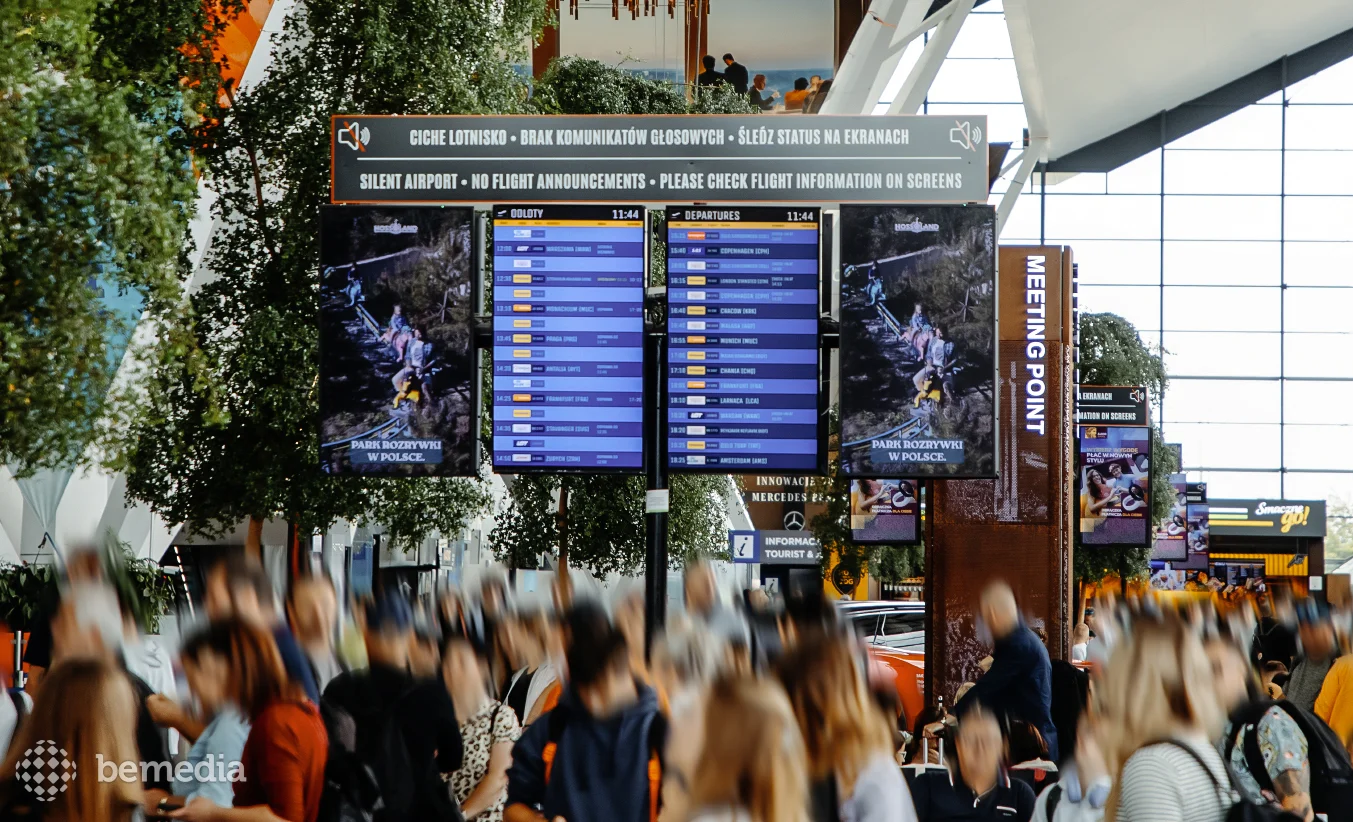
DOOH networks offer flexibility and dynamic content delivery. Digital screens and video walls are prominent in waiting areas and gate corridors. They support video content, localized messaging, and day-parting strategies. Gate Information Digital Screens (GIDS) are particularly effective for B2B communication, as passengers monitor these displays closely for flight updates.
Branded Zones and Experiential Installations
For brands seeking deeper engagement, custom installations utilize the physical space to create memorable interactions. Examples include:
- Multi-surface architectural takeovers and terminal wraps.
- Product demonstration zones and premium sampling areas.
- Immersive spaces that encourage social sharing.
These formats excel during product launches and major corporate milestones.
Sponsorship Integrations and Airport Partnerships
Brands can also integrate directly into the passenger experience by sponsoring specific amenities, such as:
- Complimentary Wi-Fi networks.
- Mobile charging stations.
- Business lounges and relaxation zones.
See campaigns we have delivered for global brands →
Is Airport Advertising in Poland Right for Your Brand?
Effective media selection depends on aligning the environment with your target demographic and business objectives.
B2B and B2C Brand Suitability
Airport formats adapt seamlessly to different sectors:
- B2B: Technology, fintech, banking, and consulting firms can efficiently target senior management and C-suite executives who are highly receptive to business-oriented messaging while traveling.
- B2C: Automotive, beauty, premium FMCG, and tourism brands can engage high-income households and individuals actively looking for premium experiences and products.
Industries and Product Categories That Benefit Most
Based on audience behavior, specific sectors consistently perform well in this environment:
- Banking & Fintech: Reaches affluent individuals and corporate decision-makers.
- Automotive: Targets high-income buyers with premium fleet or personal vehicle messaging.
- Technology & Electronics: Connects with early adopters and business professionals.
- Beauty & Premium FMCG: Leverages proximity to duty-free retail for immediate conversion.
- Tourism & Regional Promotion: Influences future travel choices and promotes specific destinations.
- Employer Branding: Highlights corporate culture to top-tier talent in transit.
Measuring the Effectiveness of Airport Advertising in Poland
Evaluating campaign performance requires a shift from standard digital metrics to methods suited for physical environments.
Key Metrics and Methods for Campaign Evaluation
Campaign impact is typically assessed through a combination of data points:
- Audience Traffic Data: Utilizing official passenger volume statistics to calculate precise impression rates.
- Brand Lift Studies: Conducting post-campaign surveys to measure shifts in brand awareness and recall.
- Direct Response Mechanisms: Implementing dedicated QR codes or campaign-specific URLs to track engagement and lead generation.
- Retail Performance: Monitoring on-site sales data for brands available within the airport’s commercial zones.
- DOOH Analytics: Using digital network data to align display times with the demographic profiles of passengers on specific flight routes.
Tips for Launching a Successful Airport Advertising Campaign in Poland
To maximize the impact of your investment, the campaign must be tailored to the specific dynamics of the aviation environment.
Planning for High-Travel Periods
Strategic timing aligns your media presence with passenger peaks. Consider scheduling campaigns around:
- Major industry conferences and corporate events for B2B targeting.
- Summer holiday seasons for consumer and family-oriented brands.
- Q1 and Q4 business travel surges for financial and tech services.
Understanding the seasonal rhythm of the airport allows for precise audience targeting.
Adapting Creative to the Airport Environment
While passengers have more dwell time, the creative must still be immediately legible. The message should be clear, authoritative, and tailored to the context of contact. Placement strategy is equally critical:
- B2B and financial messaging performs well near business lounges and departure gates.
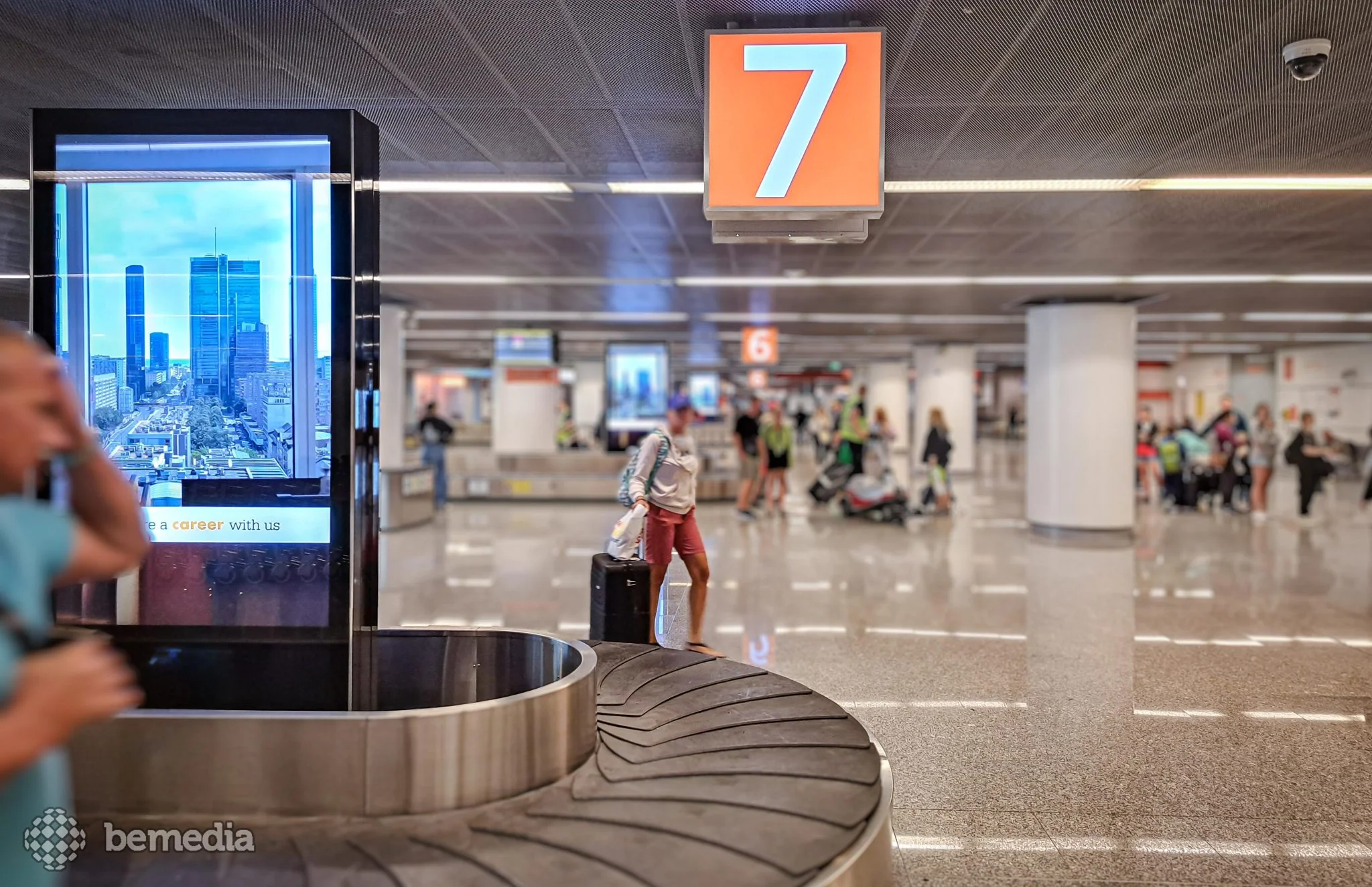
- Automotive and real estate campaigns are highly effective near arrivals and baggage claim.
- FMCG and beauty brands benefit from proximity to retail corridors.
Using Digital Integration and Real-Time Data
Leveraging DOOH capabilities allows brands to remain agile. Digital formats enable day-parting, displaying business-focused content during morning commuter flights and consumer-focused content during weekend leisure departures. Integrating QR codes bridges the gap between offline visibility and digital conversion.
We will promote your business!


Next Steps and Expert Advice
A successful campaign does not begin with selecting the largest available billboard. It starts with a comprehensive understanding of the audience and the environment.
How to Start Your Airport Advertising Campaign in Poland
At BE Media, we help medium and large brands plan their presence in public spaces. We do not simply broker space; we analyze your brand’s goal, your target audience, and the context of the contact. Only then do we recommend specific media ecosystems.
The process involves:
- Defining the business objective (e.g., product launch, employer branding, or sustained visibility).
- Selecting the appropriate airports and terminals that align with your desired demographic.
- Matching the format to the goal-utilizing selected partner solutions across OOH and DOOH networks.
- Coordinating the implementation to ensure seamless execution and high-quality exposure.
Summary of Key Benefits for Brands
Airport advertising offers an unparalleled combination of affluent demographics, high-quality attention, and premium positioning. Whether you are scaling an international brand in Poland or targeting niche B2B decision-makers, this environment supports robust frequency of contact and lasting brand recall.
By strategically integrating airport media with broader OOH, DOOH, indoor, and city transport campaigns, brands can secure a dominant, cohesive presence in the public space.
Let’s talk about planning a campaign tailored to your brand’s specific goals. Contact BE Media to request a strategic recommendation for your upcoming media activities.