
Bus Advertising in Poland

Presence in the Daily Rhythm of the City
Bus advertising places a brand inside the everyday movement of the city. Municipal buses cover hundreds of kilometres each day, passing through city centres, business districts, residential neighbourhoods and retail zones.
This is a medium that cannot be turned off, skipped or scrolled past: it works continuously, from early morning until late at night.
In large Polish cities, municipal buses carry an average of 3 million passengers a day. Add to that the drivers waiting in traffic, the pedestrians and the cyclists, and a single bus reaches a broad audience of commuters, students, families and visitors.
For international brands running campaigns in Poland, this scale is available without any local infrastructure of your own. BE Media plans, coordinates and executes the entire campaign on the ground.
Bus Advertising Formats
A bus campaign is only as effective as the match between format and objective. We select each format to fit the goal of the campaign, the audience and the budget, rather than offering one fixed package.
Exterior Bus Advertising
- Full wrap. A complete vehicle wrap turns the bus into a mobile billboard with the maximum available surface and visibility from every side. It is the strongest choice for image campaigns and product launches that need to be noticed.
- Fullback. Advertising on the rear of the bus is the format chosen most often by advertisers. Drivers travelling behind the vehicle have extended contact with the message, particularly in slow-moving traffic, which makes fullback an efficient way to reach both drivers and the passengers of other vehicles.
- Side panel. The large side surface of the bus provides clear visibility for pedestrians and for passengers waiting at stops.
- Halfback. A partial rear wrap and a more budget-conscious alternative to the full fullback format.

Interior Bus Advertising
- LCD screens. Screens of 17 to 22 inches display HD spots of 15 to 30 seconds in rotation, giving passengers repeated contact with the message. We position the monitors on both sides inside the vehicle, so the advertising remains visible from anywhere on board.
- Frames and posters. A classic interior format placed above the seats, with which passengers have contact throughout longer journeys.
- Audio-video spots. A dynamic format that engages both sight and sound.


Why Bus Advertising Works
Bus advertising places a brand in the everyday surroundings of city residents and builds recognition through the repetition of contact. Its effectiveness rests on several characteristics:
- Round-the-clock exposure, 24 hours a day, 365 days a year.
- Mass reach across the entire city.
- A low cost per contact (CPM), among the most cost-efficient OOH formats.
- Precise territorial targeting, with the option to select specific lines and depots.
- Long contact time, as a passenger spends an average of 25 to 45 minutes a day with the advertising.
- Direct contact with drivers, reached effectively through the fullback format.
- Resistance to weather conditions, with film that holds its quality throughout the year.
Research indicates that two thirds of travellers pay attention to advertising on screens inside buses, which confirms the medium as a dependable way to build brand recognition.

Who Bus Advertising Is For
Bus advertising is a versatile medium that supports campaigns across industries and at different scales.
Thanks to the flexibility of route and format, it works for national brands, multi-city rollouts and international brands building presence in the Polish market, as well as for agencies and media houses planning campaigns on behalf of their clients.
The format is particularly well suited to image and brand-recognition campaigns, sales support, product launches, seasonal promotions and a brand’s visible presence in a specific city.
For larger budgets, a 360-degree approach that combines full vehicle wraps, in-bus LCD screens and advertising at stops delivers consistent coverage across the urban space.
Where We Run Campaigns
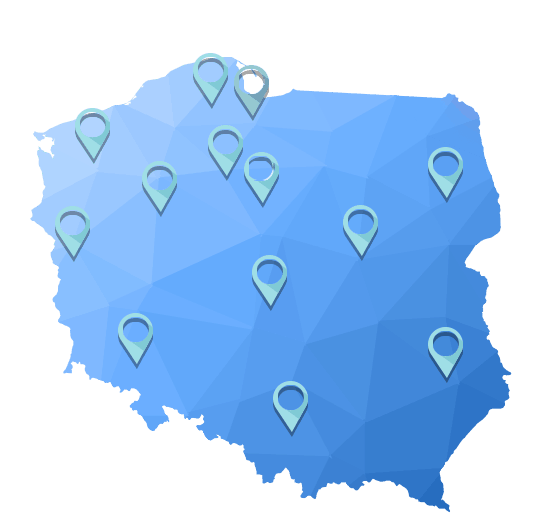
We run bus advertising campaigns across Poland, in cooperation with municipal transport operators, which gives access to thousands of vehicles nationwide.
Working With BE Media
BE Media brings 15 years of experience in out-of-home advertising and has delivered hundreds of campaigns for leading brands.
We manage the full process: graphic design, print and application of the film, and the formalities with the transport operator.
For international clients, this means a single point of contact, local market knowledge and the ability to run several formats through one partner, without the need for marketing structures of your own in Poland.
The way we work is straightforward:
- You contact us.
- We analyse your objectives and audience.
- We recommend the right formats and locations.
- We prepare the strategy and the quote.
- We launch the campaign.
- We monitor delivery and provide reports on the campaign.
Part of a Multiformat Campaign
Bus advertising rarely works in isolation. It complements other out-of-home and digital-out-of-home formats, and we frequently combine it with tram and metro advertising, billboards, LED screens and advertising at stops.
Each touchpoint plays a different role:
- vehicle exteriors build awareness among pedestrians and drivers
- in-bus screens deepen the message among passengers
- advertising at stops reinforces contact in moments of waiting



Trusted by Leading Brands


Start Planning Your Campaign
Let us plan a bus campaign matched to the goals of your brand. Contact BE Media for a recommendation of formats and an individual quote prepared around your objectives, audience and the scale of your campaign.


Frequently Asked Questions
The cost depends on the chosen format (full wrap, fullback, halfback or side panel), the city, the number of vehicles and the duration of the campaign. Every campaign is priced individually and matched to your objectives, so contact us for a quote prepared for your specific plan.
Yes. A campaign can be planned on chosen lines and depots, for precise territorial reach in a particular part of the city, placing your message where your audience actually moves.
Exterior advertising remains visible thanks to street lighting, while interior LCD screens emit their own light, which ensures clear visibility at any time of day or night.