
What defines the cost of digital billboard advertising in Poland? There is no single price list, because costs depend on the strategic selection of media, the quality of audience attention, and the context of contact.
Prices typically start at a few hundred PLN for regional screens and scale to several thousand PLN per month for premium, high-visibility formats in major cities. Understanding these variables allows brands to plan their presence in public space effectively and align the budget with specific campaign goals.
What Is Digital Billboard Advertising in Poland?
Digital billboard advertising, or DOOH (Digital Out-of-Home), involves planning a brand’s presence in public space using electronic screens. These LED displays provide high-visibility formats capable of showing dynamic images and motion content.
In Poland, the OOH market reached a record 806 million PLN in 2024, with the digital segment growing by 32%. This consistent growth demonstrates that brands value the quality of contact and visibility in the daily rhythm of the audience.
Unlike printed outdoor media, digital screens offer flexibility in matching the format to the campaign goal. While traditional formats remain effective for building long-term recognition, DOOH allows multiple messages to rotate on a single screen. This enables brands to adapt creatives swiftly, adjust communication based on the time of day, or respond to contextual triggers: features that support campaigns requiring agility and a specific context of contact.
Digital Billboards vs. Traditional Billboards
Both digital and classic printed formats play distinct roles in a media strategy. Traditional billboards utilize durable materials to maintain a continuous, static message throughout the day. They are highly effective for maintaining consistent brand visibility and are a staple in broad awareness campaigns. However, production and deployment require lead times of 7-10 business days.
Digital screens leverage LED technology, allowing ads to rotate and build frequency of contact dynamically. This capability enables precise timing and contextual messaging. While digital formats generally command a higher initial investment, the agility to update content without production delays and the capacity for motion often justify the cost.
Most importantly, whether static or digital, outdoor advertising integrates into the audience’s natural environment without being skipped or blocked.
Key Features of Digital Out-of-Home (DOOH) Advertising
DOOH advertising provides marketers with robust tools to design campaigns around business objectives. The format utilizes digital screens to capture premium attention through motion and brightness, allowing multiple advertisers to share a high-quality space.
A primary strategic advantage is contextual relevance. Messages can be updated remotely to reflect limited-time offers, current events, or external triggers like weather. Programmatic DOOH further streamlines this by automating screen time purchases, offering scalability and real-time adjustments. This approach combines the prestige of outdoor exposure with the strategic targeting expected from modern media planning.
FILL OUT THE FORM
GET A FREE QUOTE AND CONSULTATION!
Types of Digital Billboard Formats Available in Poland
Poland offers a diverse range of DOOH formats, utilizing both owned channels and selected partner solutions. Choosing the right screen involves analyzing the target audience, the decision-making environment, and the intended scale of the campaign.
Large-Format Digital Billboards
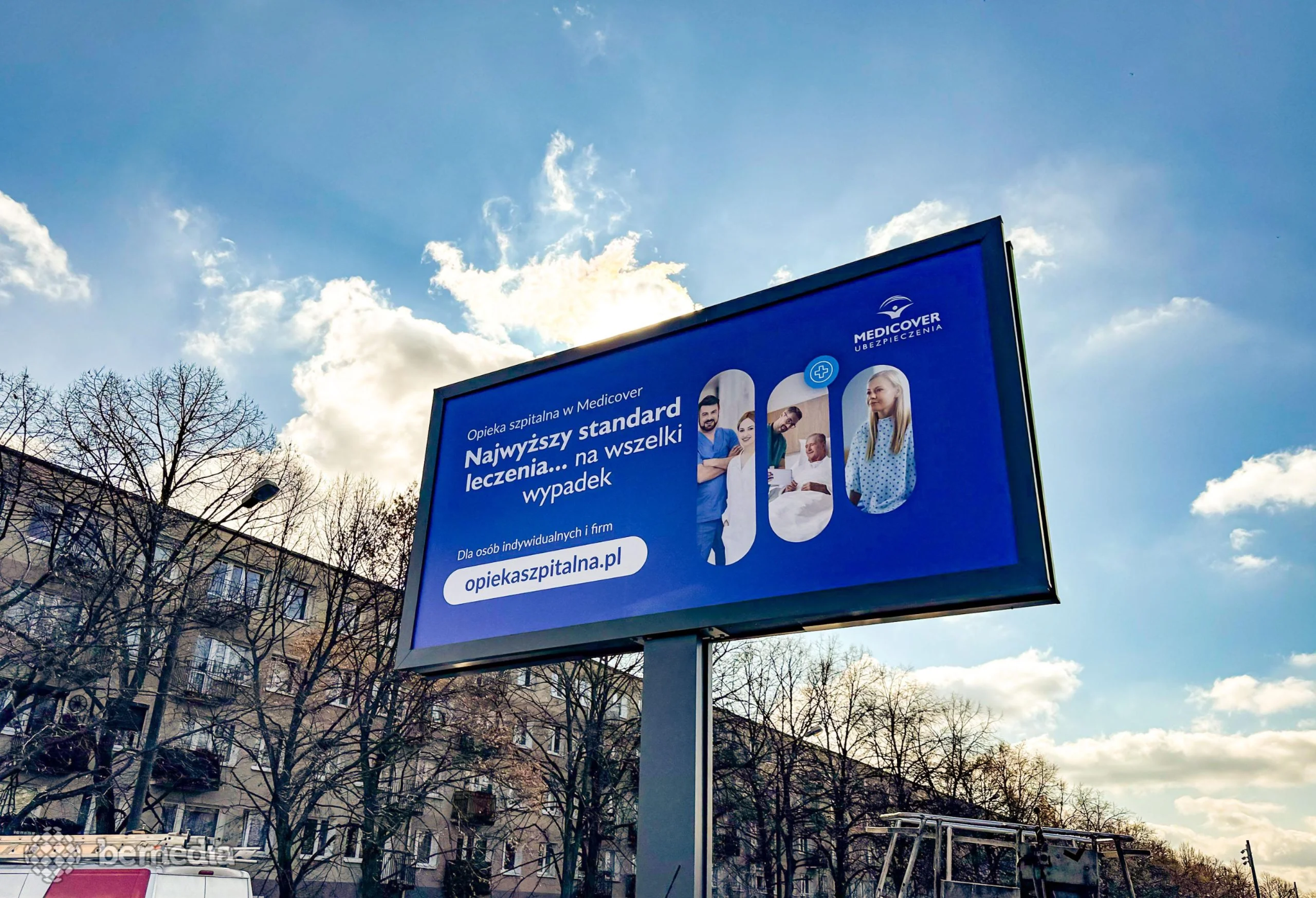
Large-format screens represent high-visibility formats situated in Poland’s primary urban centers, along major commuter routes, and at key intersections. Their scale and luminance secure premium attention from significant distances.
These formats are highly recommended for large national campaigns, international brand launches, and initiatives requiring a prestigious presence in the urban space. Due to their reach and prime locations, these placements are positioned at the higher end of the pricing spectrum.
Citylights and Internally Lit Digital Displays
Digital citylights and internally illuminated displays integrate seamlessly into the daily rhythm of the city. Standard citylights (2.16 m²) are prevalent across Poland, with thousands of units located at transit shelters, pedestrian walkways, and urban centers. They provide excellent repeatability of exposure.
Larger illuminated formats, such as Backlight 18 m² and 32 m², ensure messages remain crisp regardless of ambient lighting. These formats effectively support both local campaigns and broader regional strategies, offering a balance between strong visibility and cost-efficiency compared to the largest LED installations.
Unique and Special Venue Digital Screens
Beyond standard street-level formats, strategic media selection often includes specialized environments where the audience exhibits higher quality of attention. This includes shopping malls, transit hubs, and airports, as well as highly targeted indoor environments like medical facilities (clinics and pharmacies), academic spaces, and premium office buildings.
Advertising in these specialized venues allows brands to connect with audiences in specific decision-making environments. Whether it is building trust in a medical setting, maintaining daily contact in a corporate center, or capturing the attention of travelers, these formats often yield a higher CPM but deliver exceptionally precise audience alignment.
See LED screen locations and technical specs →


How Much Does Digital Billboard Advertising Cost in Poland?
In Poland, DOOH pricing reflects the location’s prestige, the quality of attention it commands, and the scale of the campaign. Prices generally sit higher than static equivalents, but the strategic advantages often offset the premium.
Average Price Ranges and CPM in Major Polish Cities
Monthly engagements for digital screens can start at a few hundred PLN in regional areas and escalate to several thousand PLN in prime metropolitan locations. Digital placements typically command a 40-60% premium over static boards in the same vicinity. In terms of CPM (Cost Per Mille), global and European benchmarks place small-market digital screens at roughly $5-$15, while major city screens range from $12-$30.
Premium, iconic locations can reach $30-$80 CPM. If a high-traffic screen costs 5,000 PLN per month but delivers millions of verified impressions, the resulting efficiency aligns well with campaigns designed for medium and large brands.
Monthly and Weekly Rate Examples
Media planning in DOOH accommodates various schedules. While traditional OOH often operates on standard monthly cycles, DOOH allows for shorter, intensive bursts or flexible programmatic models. Securing placements for 3 to 6 months typically yields more favorable monthly rates.
Campaign scale dictates the overall budget. A comprehensive campaign across Poland’s eight largest cities, utilizing a mix of digital and traditional partner solutions (approximately 600 panels), can require an investment in the range of 330,000 to 360,000 PLN. This highlights why strategic planning is critical for national and international clients aiming to optimize large-scale media deployments.
What Factors Affect Digital Billboard Advertising Cost?
Pricing is not arbitrary; it is a direct reflection of the campaign’s structural requirements and the physical attributes of the media. Understanding these elements is essential for matching the format to the campaign goal.
Location and Audience Traffic
The prestige of the location is the primary cost driver. High-density urban centers like Warsaw, Krakow, and Gdańsk offer access to massive daily audiences. Placements near major commercial hubs, transit arteries, and prominent intersections command higher rates because they guarantee visibility in the daily rhythm of the recipient. A screen capturing the attention of thousands of commuters provides significant strategic value.
Size, Format, and Resolution
Physical dimensions and technological quality heavily influence rates. Large, high-resolution LED screens in central squares carry a premium compared to standard transit screens. Brands requiring maximum impact and flawless visual representation naturally gravitate toward these premium formats, adjusting their budgets to accommodate the superior hardware and screen clarity.
Ad Duration and Rotation Frequency
DOOH operates on a shared-share model, where creatives run in a continuous loop. An ad typically displays for 6-8 seconds before rotating. The frequency of this rotation directly impacts the cost. Higher frequency builds stronger repeatability of exposure but requires purchasing a larger share of voice.
Furthermore, venues with specific operating hours will have their pricing adjusted to reflect the active viewing windows.
Demand, Seasonality, and Market Competition
Market dynamics dictate pricing fluctuations. High-demand periods, such as the weeks preceding major holidays or key retail seasons, see increased competition for prime inventory, driving up costs. Conversely, scheduling campaigns during traditionally quieter periods, such as early Q1 or late summer, can uncover efficiencies and favorable rate negotiations.
Visibility and Viewing Angles
The quality of attention depends heavily on unobstructed visibility. Screens positioned with clear, extended sightlines from major roadways or pedestrian zones hold higher value. Metrics like the Visibility Adjustment Index (VAI) assist in quantifying this. Placements offering longer dwell times and minimal visual clutter command higher rates because they facilitate a more meaningful context of contact.
Programmatic vs. Direct Buying
The procurement method can influence budget allocation. Direct buying involves structured negotiations and reserved inventory, ideal for guaranteed national campaigns. Programmatic DOOH provides flexibility, allowing advertisers to set parameters, adjust pacing, and scale in real-time. This method provides agility, though it requires active management to ensure the budget is utilized efficiently across the selected partner networks.
Location-Based Pricing: Urban, Suburban, and Rural Differences
Geographic targeting is a foundational element of strategic media selection. Poland’s diverse urban landscapes present varying pricing tiers, each serving a distinct strategic purpose.
Prime City Center Rates (Warsaw, Krakow, Gdańsk)
The highest pricing tiers are concentrated in Warsaw, Krakow, and the Tri-City (Gdańsk, Gdynia, Sopot) area. Warsaw, as the central business hub, features premium locations near office districts and iconic city objects. Krakow offers access to dense pedestrian zones and tourist traffic, while the Tri-City area provides a mix of corporate, industrial, and leisure environments. Campaigns here are investments in high-level brand recognition and prestige.
Secondary Cities and Regional Towns
Expanding outside the primary metropolitan areas into secondary cities offers a highly efficient way to build national reach. Costs in these regions can be notably lower, allowing medium and large brands to maintain consistent presence without exhausting their budgets. These areas are crucial for FMCG, retail, and automotive sectors looking to support local distribution networks and maintain daily contact with regional consumers.
Highways, Airports, and Exclusive Venues
Certain non-urban placements carry premium pricing due to the specific audience they capture. Highway networks reach a captive audience of long-distance commuters and logistics professionals. Airports provide access to international travelers with high purchasing power in a high-dwell-time environment. These exclusive venues support highly targeted campaigns where the quality of the audience justifies the investment.
Compare DOOH inventory across Polish cities →
What Are the Additional Costs of Digital Billboard Campaigns?
Effective budget management requires anticipating the complete lifecycle of the campaign, beyond the foundational media space rental.
Creative Development and Production Fees
High-quality creative execution is mandatory for DOOH. While adapting static designs incurs minimal fees, developing bespoke motion graphics or video content requires professional production. Outdoor creatives must be legible instantly and visually compelling. Investing in specialized design ensures the message is optimized for the screen’s resolution and the audience’s viewing window.
Installation, Setup, and Technical Support
While DOOH eliminates the need for physical printing and vinyl mounting, operators often apply technical setup fees. This covers the ingestion, scheduling, and quality assurance of the digital files within the broadcasting software. Clarifying these technical administration costs upfront ensures smooth deployment.
Permitting and Licensing
In Poland, outdoor advertising structures are subject to municipal regulations and zoning laws. While established media operators manage the permitting for their existing networks, custom installations or experiential activations may require specific administrative processes. It is vital to account for standard lead times to ensure compliance with local advertising standards.
Ongoing Maintenance and Service Costs
Standard technical maintenance is generally embedded in the media rental fee. However, campaigns demanding high-frequency creative swaps, dynamic data integrations, or complex A/B testing may incur additional servicing fees from the operator. Defining the scope of active campaign management during the planning phase prevents unforeseen operational expenses.
How to Budget and Plan a Digital Billboard Advertising Campaign in Poland
Strategic media planning is the difference between simply buying space and executing a successful campaign. A methodical approach ensures alignment between the investment and the business objective.
Setting Realistic Budget Goals
Planning begins with defining the brand’s objective, the target audience, and the decision-making context. Is the goal broad national awareness, or targeted employer branding in corporate hubs? A standard allocation dedicates the majority of the budget to media space, with necessary provisions for creative and technical execution.
We recommend structuring budgets based on realistic market data, prioritizing formats that logically support the campaign’s intent rather than simply seeking the lowest price point.
Choosing the Right Campaign Duration
The optimal duration depends on the required frequency of contact. While programmatic allows for brief activations, sustained brand presence usually requires commitments of 4 to 12 weeks.
We advise initiating the planning process 6-8 weeks prior to the target launch. This window provides ample time for strategic format selection, creative optimization, and securing inventory in premium locations before high-demand periods.
Estimating Total Investment and Maximising Value
A comprehensive budget encompasses media rental, setup, and creative costs. Value is maximized not by cutting corners, but by ensuring every placement has a strategic justification. Partnering with experienced planners allows brands to navigate partner networks efficiently, negotiate effectively, and select the precise mix of transit, urban, and indoor media that will deliver the best quality of attention.
Measuring ROI: Is Digital Billboard Advertising Worth the Cost?
Modern marketing demands accountability. DOOH in Poland integrates robust measurement frameworks, allowing marketers to evaluate the medium’s role within their broader communication architecture.
Key Performance Metrics: Impressions, Reach, and Engagement
The Polish market utilizes standardized metrics, primarily driven by the Outdoor Track study, which evaluates major urban areas. Key indicators include Reach, Frequency, and GRP. Planners utilize traffic data, mobility patterns, and visibility algorithms to model precise impression delivery.
Furthermore, campaigns can integrate digital handshakes (such as QR codes or localized mobile search spikes) to bridge the gap between physical exposure and digital engagement.
Tools for Measuring Campaign Effectiveness
The infrastructure for measurement continues to evolve. GPS mobility data, location-based analytics, and programmatic reporting dashboards offer detailed insights into campaign delivery. Post-campaign brand lift studies and footfall attribution models help correlate outdoor exposure with actual consumer behavior, moving OOH from a purely top-of-funnel tool to a measurable component of the media mix.
Comparing Billboard ROI With Other Media Channels
OOH and DOOH serve distinct, complementary roles alongside digital and broadcast media. Unlike online ads, DOOH cannot be skipped, providing guaranteed presence in public space. It reinforces campaigns running on mobile or TV by building ambient frequency in the real world.
For medium and large brands, incorporating DOOH ensures communication reaches the audience in environments where digital fatigue does not apply, delivering premium attention that amplifies overall campaign ROI.
Key Takeaways: Paying for Digital Billboard Advertising in Poland
Digital billboard advertising in Poland represents a mature, dynamic channel for brands seeking impactful presence in public space. DOOH is a strategic tool that combines the scale of traditional outdoor media with the agility of digital execution.
With the market expanding steadily, the array of available formats allows for highly tailored communication. Success relies on matching the format to the campaign goal, understanding the context of contact, and prioritizing the quality of audience attention.
While pricing varies based on the location’s prestige and format size, the medium accommodates sophisticated strategies for medium and large enterprises, national brands, and international clients. Programmatic advancements and standardized measurement further solidify DOOH’s role in a modern media mix.
Ultimately, a successful DOOH campaign is not just about securing screen time; it is about strategic alignment. Contact us to discuss how to plan a campaign tailored precisely to your brand’s business objectives and target audience in Poland.
Request a personalised price estimate →
We will promote your business!


Common Questions About Digital Billboard Advertising Costs in Poland
Planning campaigns in a diverse market requires clarity on operational standards and strategic execution.
What permits are required for digital billboard advertising in Poland?
Digital screens require municipal permits, adhering to local zoning and visual landscape regulations. When utilizing established media networks and partner solutions, these permits are maintained by the screen operators. Advertisers must primarily ensure their creative content complies with Polish advertising laws, consumer protection standards, and industry ethics.
Are there budget options for small businesses?
While DOOH is highly scalable, we primarily see medium and large brands maximizing its value by utilizing strategic media selection. Budgets can be optimized by targeting specific regional cities, utilizing transit formats, or activating campaigns during off-peak periods. Programmatic buying also allows for precise budget control, ensuring the investment is focused strictly on the most relevant hours and locations for the brand.
How far in advance should campaigns be booked?
Strategic planning should commence 6-8 weeks before the intended live date. This timeline accommodates thorough audience analysis, format selection, and creative production. Securing inventory for highly competitive periods, such as Q4, often requires locking in placements several months in advance to guarantee access to high-visibility locations.
Can digital billboard campaigns be scheduled programmatically?
Yes, programmatic DOOH is a standard capability that enhances campaign agility. It allows agencies and brands to automate purchasing, define specific parameters (such as day-parting or weather triggers), and adjust pacing mid-flight. This technological integration aligns outdoor advertising with modern digital media strategies.
What hidden or unexpected costs can arise?
Unforeseen costs typically stem from a lack of upfront planning. Variables include fees for excessive creative rotations, mid-campaign file swaps, or specialized reporting requirements. Working with an experienced media partner ensures that all technical, administrative, and media costs are consolidated into a transparent proposal from the outset.