
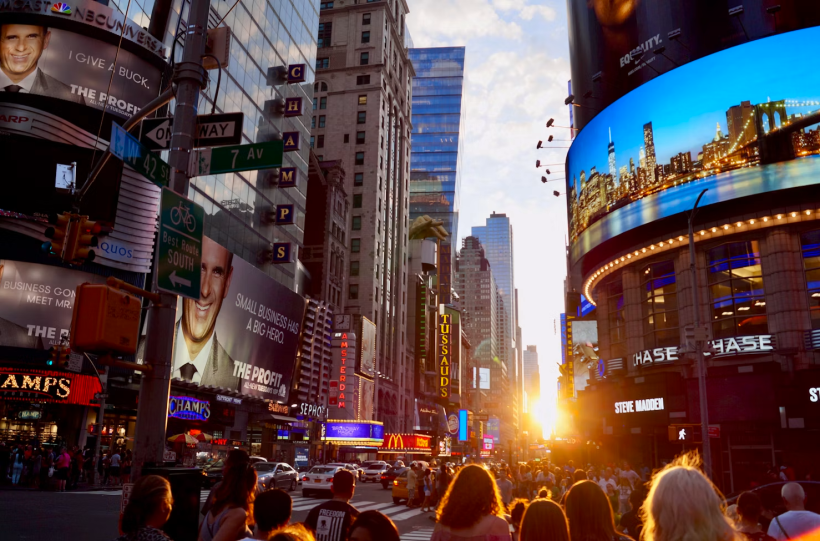
How do you ensure your brand is noticed in a crowded media landscape? Out-of-Home (OOH) and Digital Out-of-Home (DOOH) advertising secure your brand’s presence in the public space, reaching audiences exactly where they live, work, and commute.
This article explains the core differences between OOH and DOOH and details six main formats marketers use to build visibility, increase the frequency of contact, and integrate their message into the daily rhythm of their recipients.
What Is OOH Advertising?
OOH advertising relies on a simple premise: placing a brand message in the physical environment where the audience spends their time. Rather than interrupting a user’s experience like a digital pop-up, it blends naturally into the urban landscape, creating a consistent presence in multiple touchpoints without being skipped or blocked.
OOH Advertising Definition and Scope
Out-of-Home (OOH) advertising encompasses all media formats designed to reach consumers outside their homes. Whether a person is walking down a high street, driving on a major road, or using city transport, OOH formats are strategically positioned to capture attention. It is a fundamental tool for medium and large brands aiming to build strong recognition and maintain visibility in the public space.
A successful OOH campaign is not just about choosing the largest available space. It requires strategic media selection based on the campaign’s goal, the target audience, and the context of contact.
By appearing in environments the audience already navigates, OOH supports broader media strategies, reinforcing awareness and driving subsequent brand interactions in other channels.
FILL OUT THE FORM
GET A FREE QUOTE AND CONSULTATION!
What Is DOOH Advertising?
Digital Out-of-Home (DOOH) introduces dynamic screen technology to traditional outdoor placements. It provides brands with greater flexibility, enabling them to align their creatives with specific contexts, times of day, or audiences.
Key Features of Digital Out-of-Home
DOOH utilizes digital screens located in shared public spaces, from transport hubs and major intersections to medical facilities and corporate environments. This format transforms how campaigns are planned, offering the agility to update messaging quickly and tailor content to the immediate decision-making environment.
The core advantage of DOOH is contextual relevance. A retail or fast-food brand can change its creative based on the weather or time of day, ensuring the message resonates perfectly with the recipient’s current mindset. Furthermore, DOOH supports high-quality video and animation, capturing a higher quality of attention.
Because it operates without relying on personal IDs or third-party cookies, it remains a highly effective, privacy-friendly channel for securing premium visibility.
OOH vs DOOH: Main Differences
While both OOH and DOOH aim to build a brand’s presence in the public space, they serve different strategic roles. Understanding these nuances is critical for effective media planning.
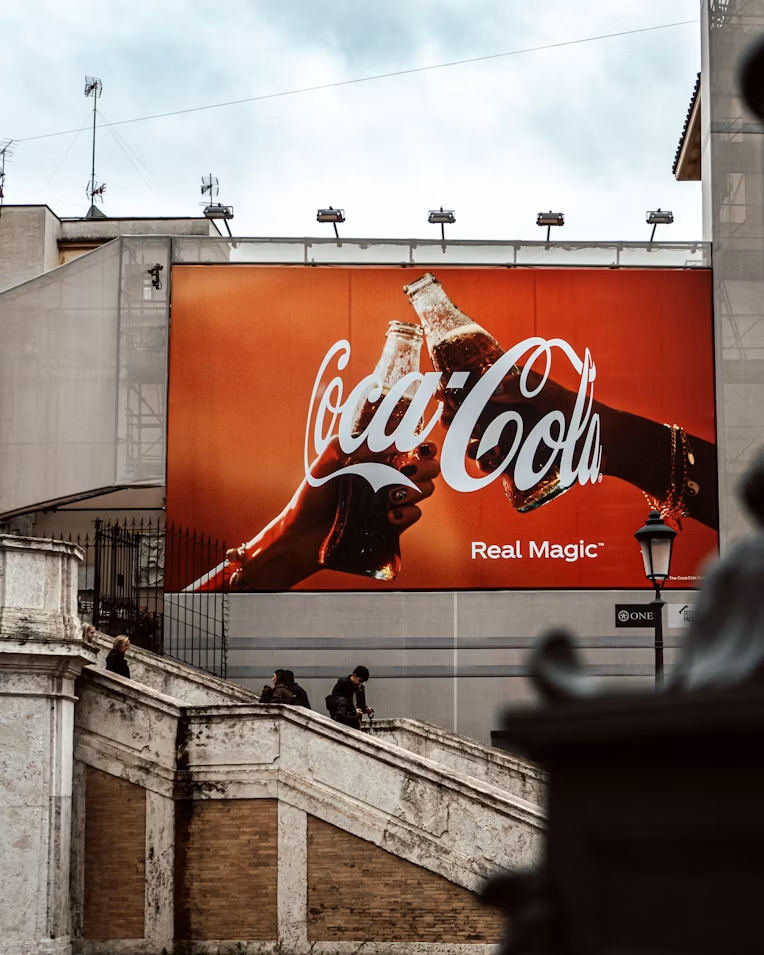
Traditional OOH relies on static formats. Once installed, the creative remains consistent throughout the campaign, providing a brand with 100% share of voice on that specific placement. This permanence is excellent for building prestige, trust, and long-term brand recognition. It establishes a solid, unmoving presence that audiences encounter repeatedly.
DOOH, conversely, rotates multiple messages on high-resolution screens. It sacrifices absolute share of voice for agility, allowing brands to run time-sensitive promotions or context-driven creatives.
Effective campaigns for international clients and national brands often combine both: traditional OOH for foundational visibility and DOOH for targeted, dynamic engagement in spaces with high footfall and specific audience demographics.
See billboard and board specifications →


Types of OOH Advertising: 6 Main OOH and DOOH Banner Formats
Choosing the right format depends entirely on matching the medium to the campaign goal. Below are six primary formats used to reach audiences effectively.
1. Billboard Advertising (Traditional and Digital)
Billboards remain a cornerstone of high-visibility formats. Positioned along major routes, city centers, and key intersections, traditional large-format boards provide broad reach and strong recall. Their sheer scale lends authority to a brand, making them highly suitable for national campaigns, product launches, and major awareness initiatives in sectors like automotive, FMCG, and telecommunications.
Digital billboards share this scale but add flexibility. They allow multiple advertisers to utilize premium locations and can display dynamic content. In highly sought-after urban areas, digital boards (including advanced 3D formats) capture the recipient’s attention and frequently generate secondary organic reach when audiences share the striking visuals online.
Explore large-format banners and illuminations →
2. Transit Advertising (Buses, Trains, Subways)
City transport advertising reaches audiences seamlessly during their daily commute. By placing messages on and inside buses, trams, and metro cars, brands achieve regular presence in the daily rhythm of the recipient. This format operates on the principle of repeated exposure and mobility, carrying the campaign across various city districts.
Transit formats are highly versatile. Exterior vehicle wraps and panels provide widespread visibility in the urban space, while interior LCD screens and platform posters engage passengers during their travel time. This prolonged dwell time is invaluable for campaigns requiring higher frequency of contact, supporting both broad image-building efforts and specific promotional activities.
3. Street Furniture (Bus Shelters, Kiosks, Benches)
Street furniture positions the brand at eye level, directly in the path of pedestrians and commuters. Formats like bus shelter posters and citylights thrive in environments with heavy foot traffic, offering excellent opportunities for precise, location-based targeting.
The primary benefit here is the quality of attention driven by dwell time. While waiting at a transit stop, audiences have the opportunity to engage more deeply with the creative. This makes street furniture highly effective for FMCG, retail, and entertainment brands aiming to influence purchasing decisions just moments before the consumer enters a nearby store or venue.
4. Place-Based Advertising (Malls, Gyms, Airports)
Place-based media targets audiences within specific environments, leveraging the context to enhance the message’s relevance. It allows brands to connect with consumers in their natural decision-making environment, whether that is a shopping center, an airport, or a specialized institutional space.
Strategic media selection is highly evident here. For example, advertising in the medical environment through networks like TVPharma Premium allows health, beauty, and parenting brands to reach patients in clinics and pharmacies-spaces characterized by calm attention and high trust.
Similarly, advertising in the academic environment via TVStudent connects brands with Gen Z, while BusinessTV reaches corporate decision-makers directly in premium office buildings. Aligning the location with the audience’s mindset ensures the message is received when they are most open to it.
5. Mobile and Vehicle-Based Advertising (AdVans, Taxis)
Mobile advertising solutions, such as Digital AdVans and wrapped taxis, bring the campaign directly to specific target zones rather than waiting for the audience to pass a fixed point. These formats combine the impact of standard OOH with geographic flexibility.
Mobile screens are particularly useful for targeted visibility around specific events, store openings, or areas where fixed infrastructure is limited. By routing vehicles through carefully selected urban corridors, marketers can build localized frequency and support short-term promotional goals effectively.
6. Large-Format Digital Screens and Spectaculars
Spectaculars are premium, large-format displays located in iconic urban centers. They are designed not just for visibility, but to make a profound statement. These installations often feature custom shapes, massive LED coverage, or advanced lighting capabilities that dominate the visual landscape.
A prime example of this prestige is the illumination on Warsaw Spire, which provides an unmissable canvas in one of the most recognizable business spaces. Spectaculars are utilized for major corporate milestones, high-end brand launches, and campaigns that require the highest degree of prestige. They ensure the brand is noticed, remembered, and positioned as a market leader.
We will promote your business!


The Bottom Line
Effective OOH planning no longer revolves around simply purchasing available space. It requires a partner capable of combining proprietary media channels with carefully selected partner solutions to precisely match the format and context of contact to the campaign’s objective.
By integrating OOH and DOOH with digital and mobile strategies, medium and large brands can build a cohesive presence that reinforces their message across multiple touchpoints.
Let’s talk about a campaign tailored to the goals of your brand. Contact BE Media to discuss strategic media selection and plan your brand’s effective presence in the public space.